



Speed Analyzer – Speed Test & Performance Audit
Run WordPress speed tests from wp-admin. Check PageSpeed, Core Web Vitals, TTFB, page weight, database health, and create PDF reports.

Solid choice
Speed Analyzer is a solid plugin choice in 2026, with a few things worth checking first. It runs on 100+ sites, is rated 5/5 and was last updated 3 weeks ago, and scores 75/100 on our health check.
- Actively developed — last update 3 weeks ago
- Tested with the latest WordPress (7.1)
- Small user base (100+ active installs)
- Very few reviews so far
How does it stack up?
Side-by-side on installs, updates, ratings & support



Daily downloads
Download spikes usually follow a new release — each site that auto-updates counts as a download.
Rankings
Where Speed Analyzer stands todayWordPress.org search rankings
Live position in the plugin search, top 100| Keyword | Position |
|---|---|
| core web vitals | #68 |
| pagespeed insights | #37 |
| performance audit | #8 |
| speed test | #6 |
| ttfb | #8 |
Version adoption
Share of active sites per release.
Rating breakdown
★★★★★★★★★★ 5 from 2 reviews
About Speed Analyzer
From the official readme · v1.19.1Description
Speed Analyzer is a WordPress speed test and performance audit plugin that runs from wp-admin. It combines Google PageSpeed Insights data with WordPress-specific checks that browser-based testing tools cannot access, including autoloaded options, database size, active plugins, persistent object cache, and server information.
Use one dashboard to identify whether a performance bottleneck comes from the server, frontend assets, Core Web Vitals, or the WordPress database. Save results, compare before-and-after tests, schedule recurring checks, receive reports by email, and generate color-coded PDF reports.
WordPress.org reviewers highlight having PageSpeed data inside WP Admin and getting clearer direction about what to optimize.
Read the reviews:
https://wordpress.org/support/plugin/speed-analyzer/reviews/
What Speed Analyzer checks
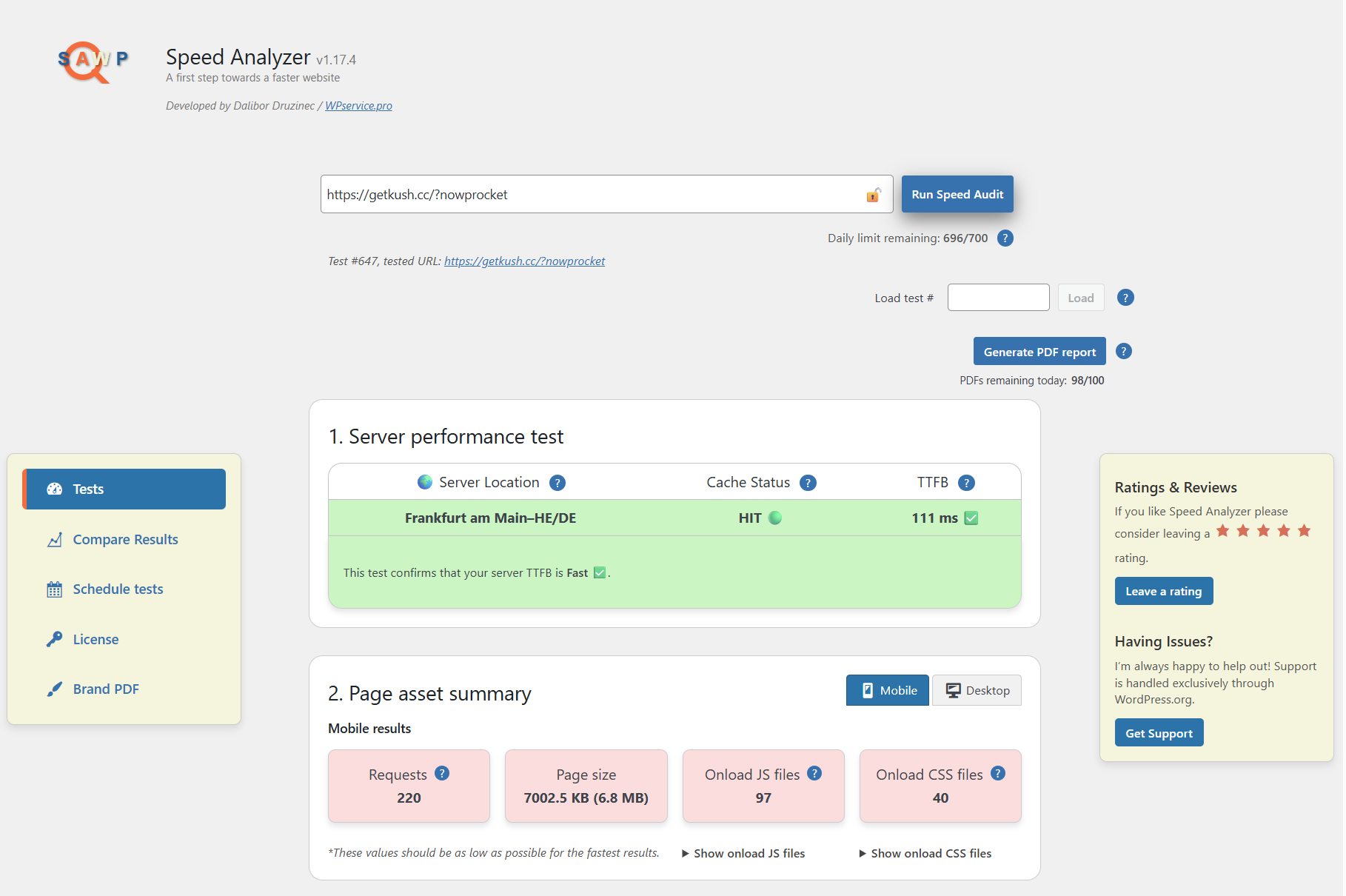
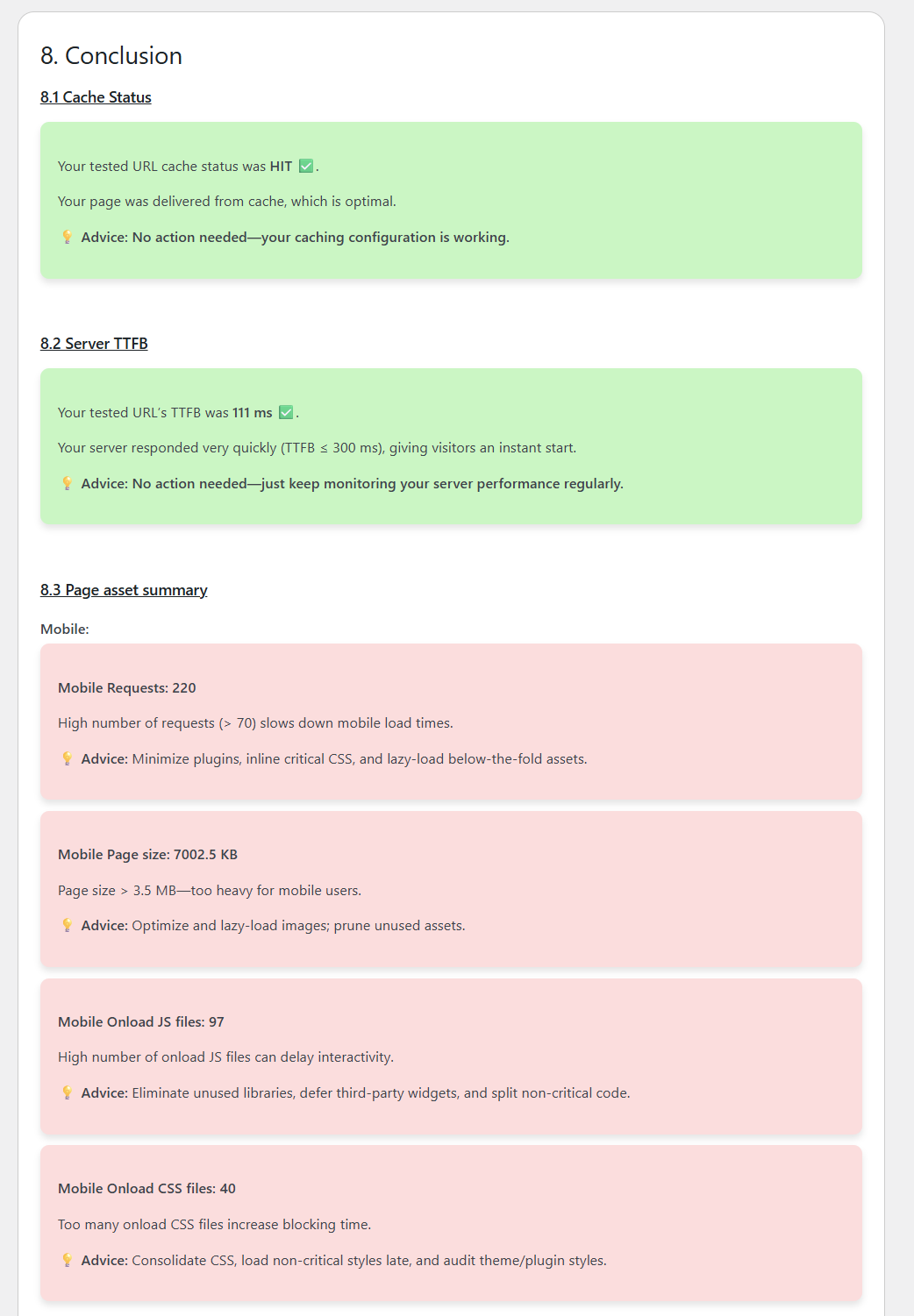
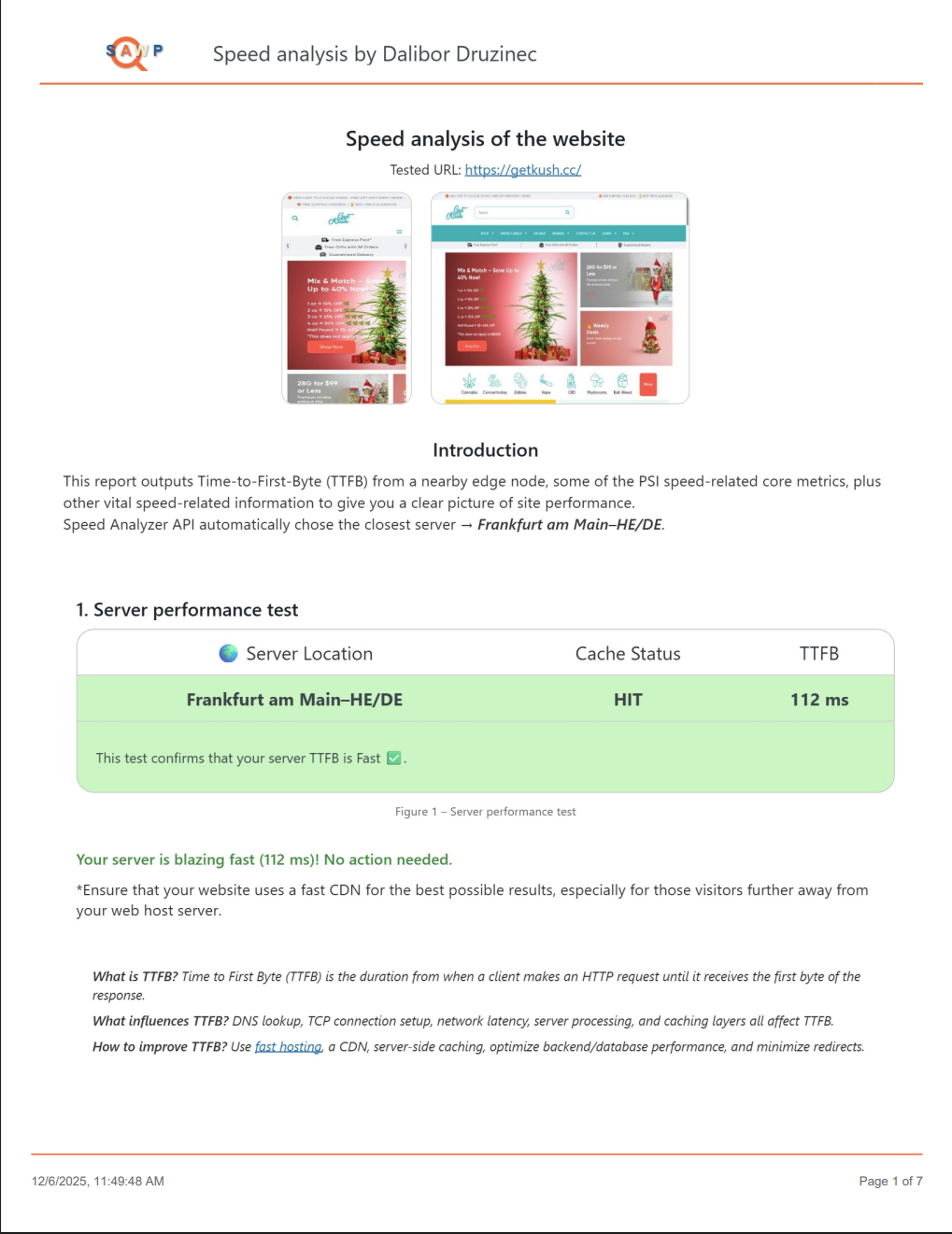
- Server Time to First Byte (TTFB), cache status, and response headers
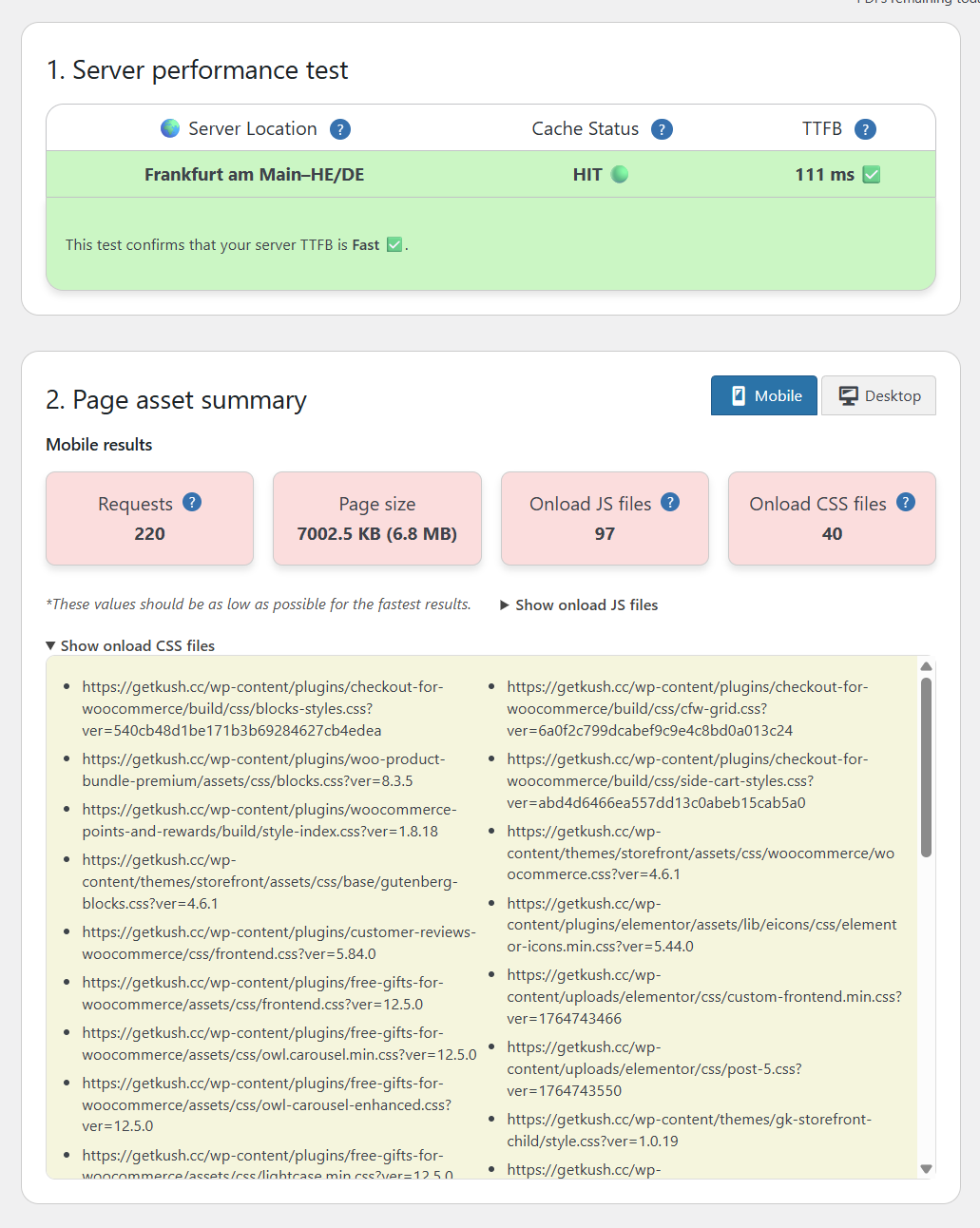
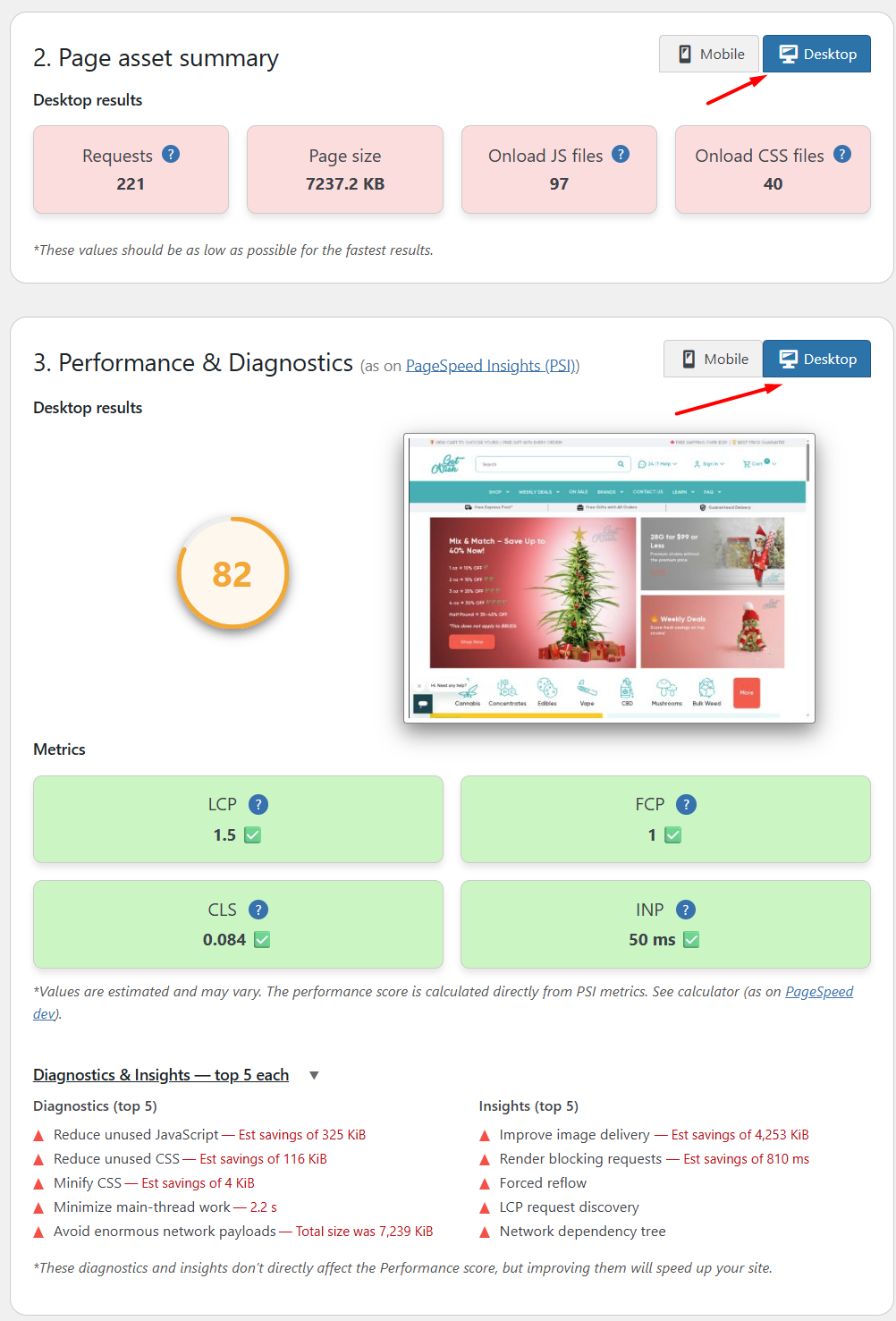
- Page requests, total page size, and loaded CSS and JavaScript files
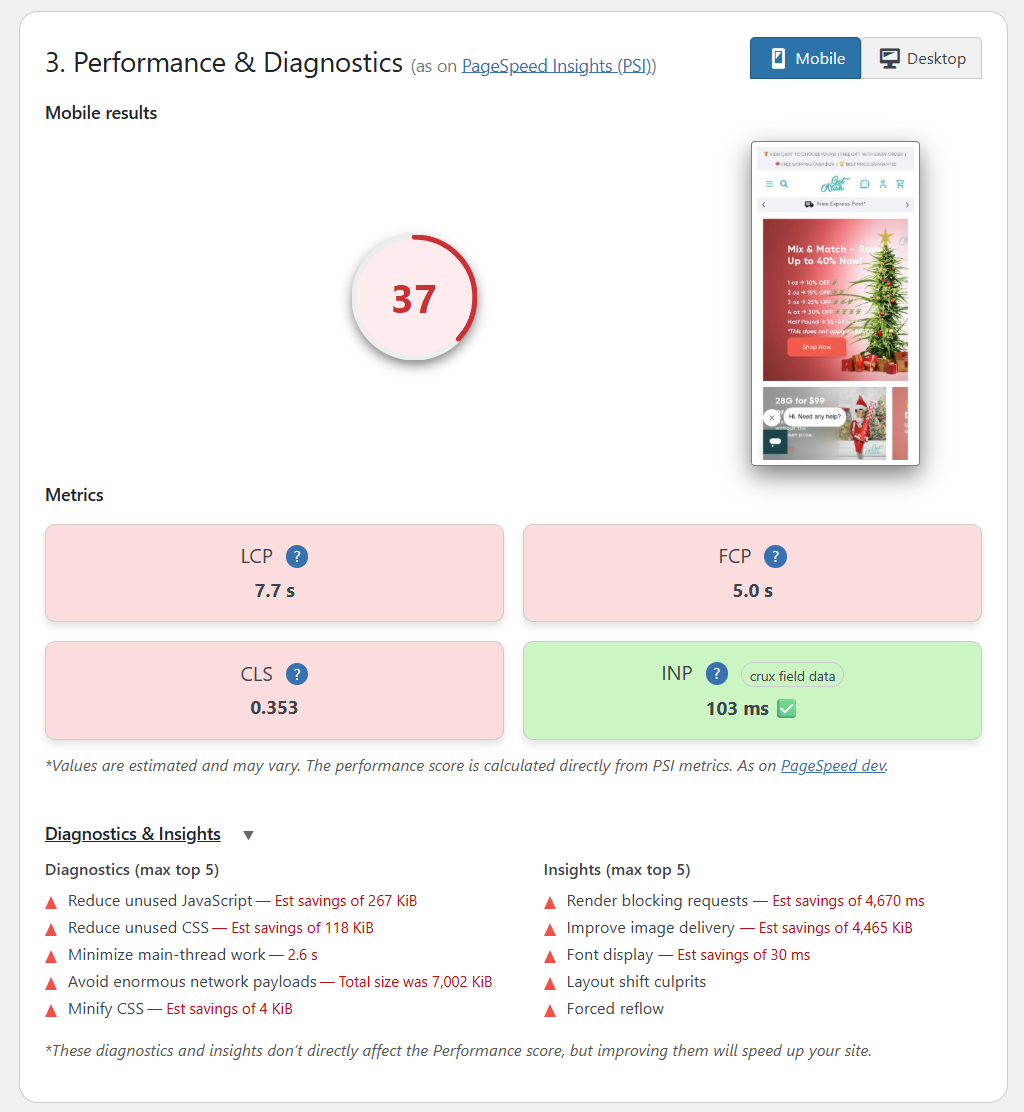
- Google PageSpeed Insights performance score and Lighthouse diagnostics
- Lab metrics including LCP, FCP, CLS, and Total Blocking Time (TBT)
- Available Core Web Vitals field data, including LCP, CLS, and INP
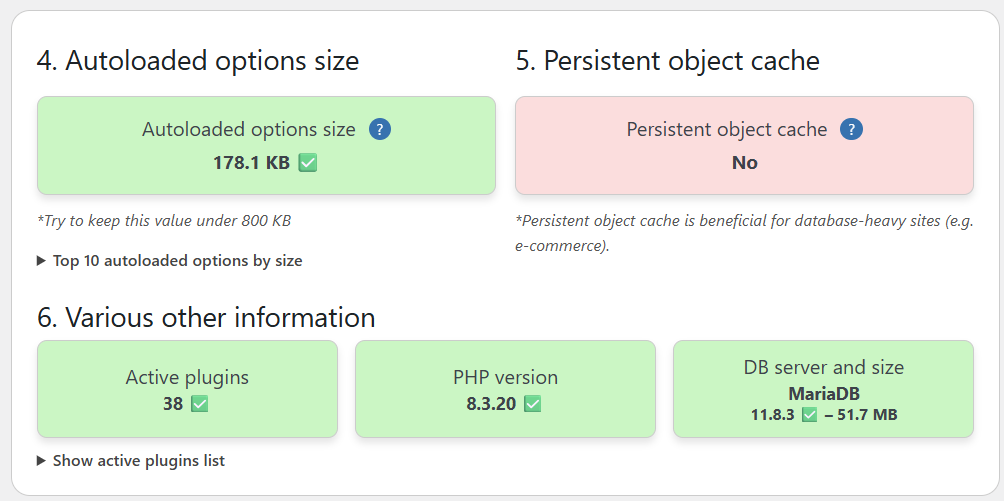
- Autoloaded options size with a list of the largest options
- Persistent object cache status
- WordPress database size, PHP version, database server version, and active plugins
Reports, comparisons, and monitoring
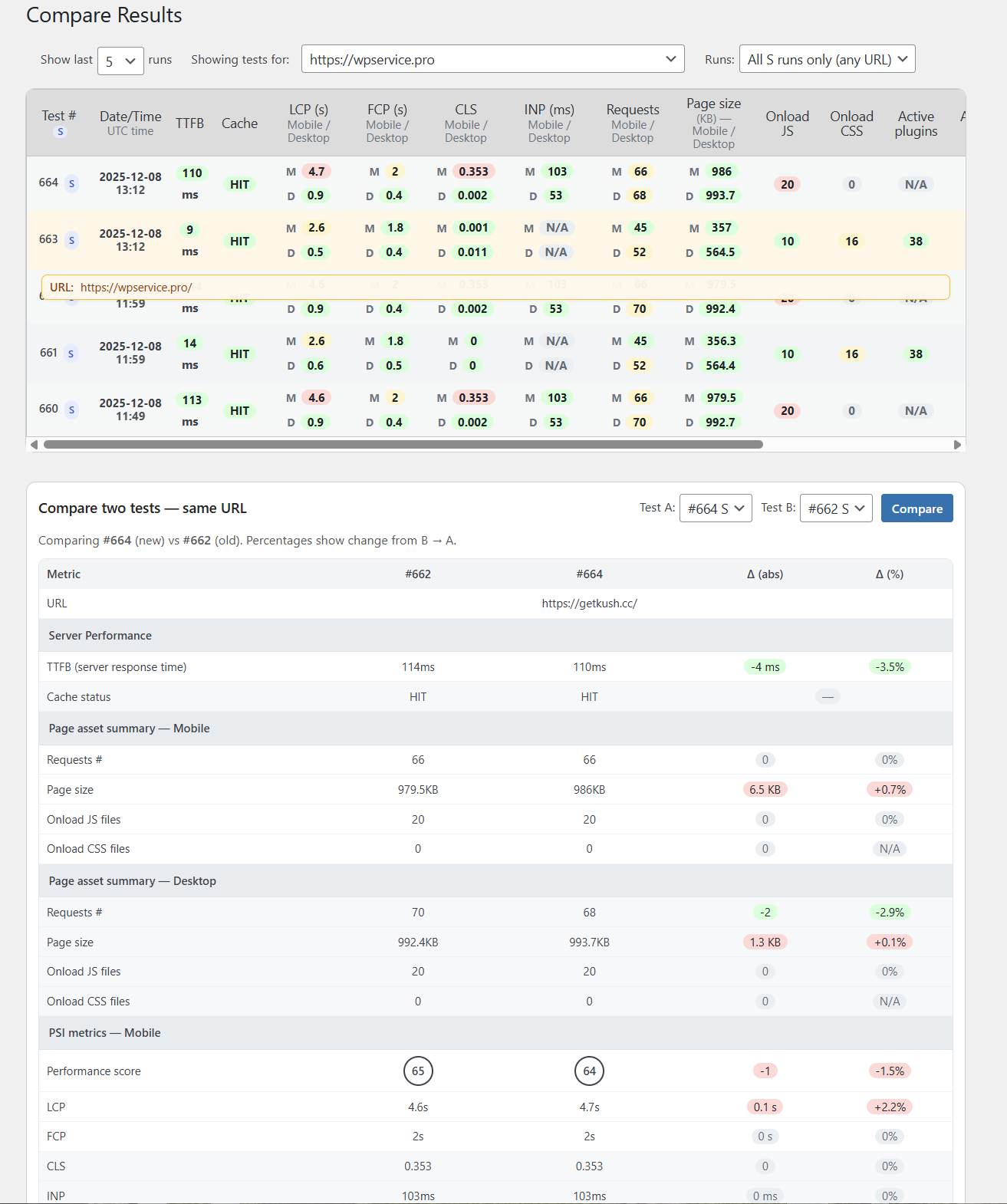
- Compare two saved tests to measure the effect of optimization work
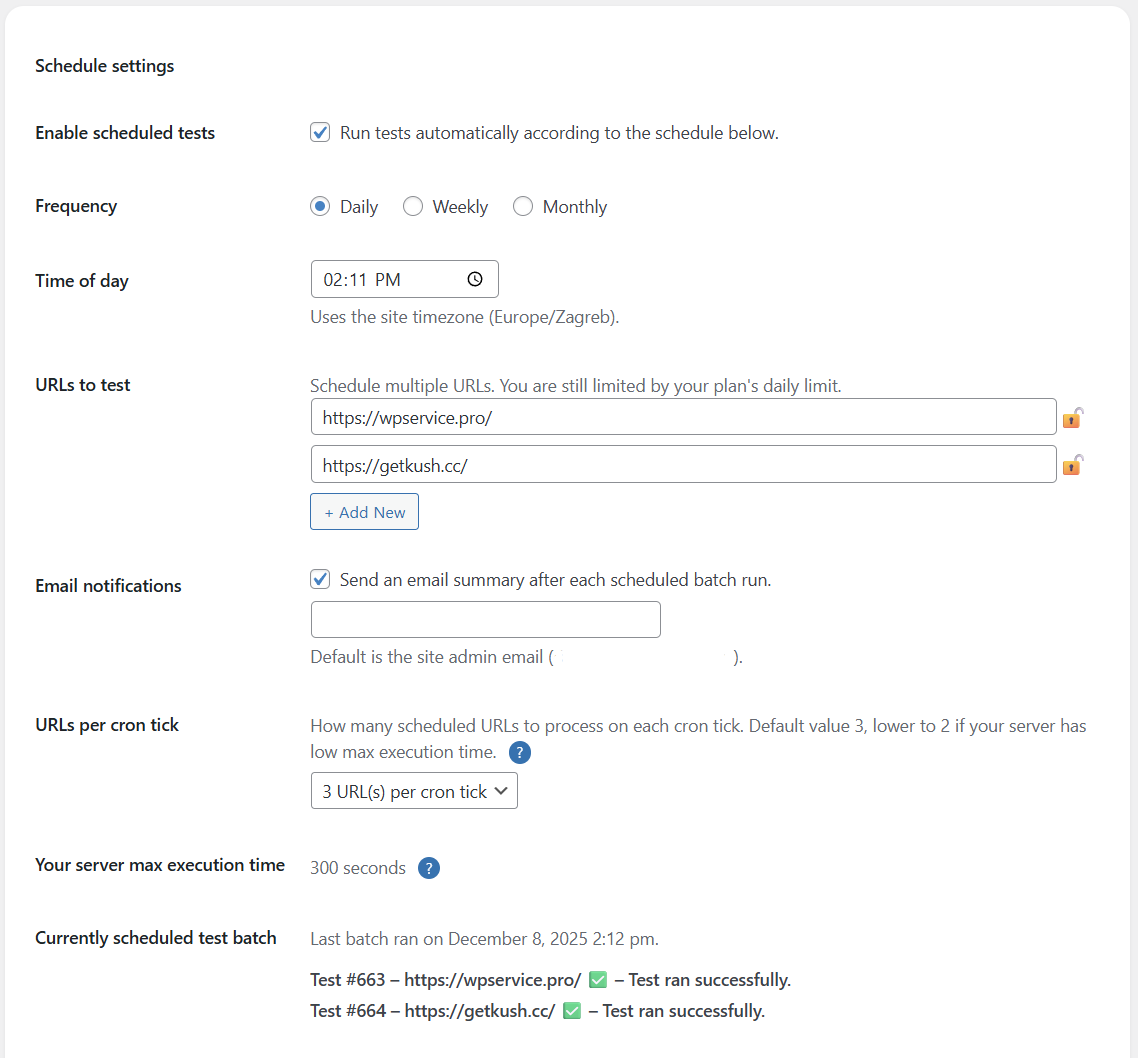
- Schedule recurring tests and receive the results by email
- Configure alerts for performance regressions or metric thresholds
- Generate downloadable, color-coded PDF reports with explanations and recommendations
- Add agency branding to PDF reports on the Agency plan
- View the latest performance score and Core Web Vitals from the Posts and Pages screens
Speed Analyzer is a diagnostic and reporting tool. It identifies performance problems and recommends next steps, but it does not automatically apply caching, CSS, JavaScript, image, or database optimizations.
Official plugin homepage:
https://wpservice.pro/our-products/speed-analyzer-wp-plugin/
Free and paid usage limits
The free tier includes up to 10 tests per day and one PDF report per day. Higher limits are available through yearly Pro, Business, and Agency plans. Your current tier and remaining usage are shown under Speed Analyzer > License.
View current limits and pricing:
https://wpservice.pro/our-products/speed-analyzer-wp-plugin/#licenses
Included third-party library
assets/js/html2pdf.bundle.min.js— bundled html2pdf.js v0.10.3 for browser-based PDF generation- Source: https://github.com/eKoopmans/html2pdf.js
External Services
Speed Analyzer performs WordPress-specific database and server checks locally. When you start a speed test, or when a scheduled test runs, selected modules connect to a managed WPservice analysis service and Google PageSpeed Insights. If you enter a license key, the plugin also contacts the WPservice license service to activate the license and to check its status and daily allowance.
WPservice hosted analysis service
Endpoints (the plugin alternates between the two):
The hosted service is used for:
- Measuring TTFB from a Cloudflare edge location
- Fetching page asset and PageSpeed data
- Proxying PageSpeed requests to Google
For TTFB tests, the tested URL is sent to the service. For PageSpeed tests, the tested URL and selected mobile or desktop strategy are sent. The service returns the test data to the plugin. No personal information is intentionally collected, and test results are not stored on the WPservice website.
Privacy policy:
https://wpservice.pro/privacy-policy/
Service terms:
https://wpservice.pro/terms-and-conditions/
Google PageSpeed Insights
The hosted WPservice endpoint forwards the tested URL and mobile or desktop strategy to the Google PageSpeed Insights API. Google returns PageSpeed, Lighthouse, diagnostics, and available Core Web Vitals field data.
Google API Terms of Service:
https://developers.google.com/terms
WPservice license service
Endpoint:
https://gatekeepersa.dalibord79.workers.dev
The license service is used for:
- Activating and deactivating a license key on your site
- Checking the license’s tier, status, and expiry date
- Checking the daily speed-test and PDF-report allowance for the license
When you activate a license key, the key and your site URL are sent to the service. When you deactivate it, the key and the activation token the service issued at activation are sent. Whenever a speed test (including a scheduled test) or PDF report is run, and when the Speed Analyzer admin screen, including its License panel, is opened, the license key, the operation being checked (speed test or PDF report), today’s usage count for that operation, and your site URL are sent. The service returns the license’s status, tier, expiry date, remaining daily allowance, and site-usage details to the plugin. Speed Analyzer only contacts this service once you enter a license key; sites without a license key do not contact it.
Privacy policy:
https://wpservice.pro/privacy-policy/
Service terms:
https://wpservice.pro/terms-and-conditions/
Installation
- In WordPress, go to Plugins > Add New Plugin and search for Speed Analyzer.
- Click Install Now, then Activate.
- Go to Tools > Speed Analyzer.
- Enter or confirm the URL and run the mobile or desktop speed test.
- Review the results and recommendations, or generate a PDF report.
- Optionally save comparisons, schedule recurring tests, or configure alerts.
No account or API key is required for the free tier.
Frequently asked questions
Does Speed Analyzer make my WordPress website faster?
Not automatically. Speed Analyzer measures performance, identifies likely bottlenecks, and explains what needs attention. You can use its results to guide manual optimization or confirm the effect of changes made by another plugin or developer.
How is it different from running PageSpeed Insights directly?
Speed Analyzer brings PageSpeed and Core Web Vitals data into wp-admin and combines it with WordPress-only information such as autoloaded options, database size, persistent object cache, active plugins, and server details. It also adds saved comparisons, scheduled tests, alerts, email results, and PDF reporting.
Is the free version enough to test my website?
Yes for ordinary use. The free tier includes up to 10 tests and one PDF report per day. Higher-volume users and agencies can choose a paid tier.
Why is there a daily limit?
The remote tests use hosted infrastructure and external API quotas. Limits reset at midnight UTC. When the limit is reached, wait for the reset or upgrade to a tier with a higher allowance.
What is sent to external services?
The tested public URL is sent for TTFB checks. PageSpeed tests also send the selected mobile or desktop strategy. WordPress-specific information such as your autoloaded-options list, active-plugins list, and database details is processed locally and is not needed by the remote PageSpeed or TTFB tests. If you enter a license key, the key, your site URL, the operation being checked and today’s usage count are sent to the WPservice license service; deactivating a license sends the key and its activation token. Sites without a license key never contact the license service.
Where are my saved test results stored?
Saved comparison and scheduled-test data is stored on your WordPress website. WPservice does not store your completed report data on its website.
Why can two PageSpeed tests return different scores?
PageSpeed results can vary because server response time, network conditions, cache state, third-party scripts, and the tested environment change between runs. Compare several tests rather than treating one score as permanent.
Why does Speed Analyzer show TBT and INP?
Total Blocking Time is a Lighthouse lab metric used in PageSpeed performance tests. Interaction to Next Paint is a Core Web Vital based on real-user field data. They measure related but different aspects of responsiveness and are not interchangeable.
Changelog
1.19.1
- Pro, Business, and Agency plans are now yearly.
- A temporary license-service outage no longer downgrades a paid site to Free; the License panel now says the service could not be reached.
- The License panel shows why a license is not active, such as an expired or disabled license.
- Added a warning 10 days before a license expires, followed by a 7-day grace period at full access.
- Activation explains why it failed and uses the license’s real expiry date; deactivation frees the site’s license slot.
- Sites over their plan’s site limit are told why and offered an upgrade.
1.19.0
- Total Blocking Time (TBT) replaces INP in lab measurements, matching Google PageSpeed Insights.
- TBT uses Lighthouse’s device-specific thresholds: 200/600 ms on mobile and 150/350 ms on desktop.
- Core Web Vitals field data continues to report INP when sufficient real-user data is available.
- Scheduled alerts can now monitor TBT. Existing INP alerts are migrated automatically.
- Fixed missing or stale metrics in Compare Results, Core Web Vitals fields, and Posts and Pages columns.
- Fixed PageSpeed values above 1,000 ms and TBT results of exactly 0 ms being misread.
1.18.6
- Resolved Plugin Check coding-standard and security findings.
- Bundled Chart.js locally instead of loading it from a third-party CDN.
- Limited debug logging to sites with
WP_DEBUGandWP_DEBUG_LOGenabled. - Improved PDF generation with staged processing and progress feedback.
- Tested up to WordPress 7.1.
For the complete release history, see changelog.txt in the plugin folder.
Screenshots
For developers
Is this your plugin? Show off the numbers.
Add a live badge to your site, docs or GitHub README. It updates on its own — no account needed.
Best Speed Analyzer alternatives
All core web vitals plugins →





FAQ
Speed Analyzer: quick answers
Straight answers, pulled from live WordPress.org data.
Live data from WordPress.org · checked Oct 10, 2026
Is Speed Analyzer free?
Yes. Speed Analyzer is free to download and use from the official WordPress.org plugin directory.
Is Speed Analyzer safe to use in 2026?
Speed Analyzer is a solid plugin choice in 2026, with a few things worth checking first. It runs on 100+ sites, is rated 5/5 and was last updated 3 weeks ago, and scores 75/100 on our health check.
How many websites use Speed Analyzer?
Speed Analyzer is active on 100+ WordPress websites and has been downloaded 4,692 times since it launched in June 2025. It was downloaded 459 times in the last 30 days.
Does Speed Analyzer work with WordPress 7.1?
Yes. The developer has tested Speed Analyzer up to WordPress 7.1.3, the latest release. It requires WordPress 5.0 or newer.
What PHP version does Speed Analyzer need?
Speed Analyzer requires PHP 7.0 or higher. Most hosts run PHP 8.x today, so it works on any modern WordPress hosting.
When was Speed Analyzer last updated?
The latest version, 1.19.1, was released on September 22, 2026 (3 weeks ago).
Who makes Speed Analyzer?
Speed Analyzer is developed and maintained by Dalibor.
What are the best alternatives to Speed Analyzer?
The most popular alternatives to Speed Analyzer are WP Fastest Cache (1M+ installs), Autoptimize (800K+ installs) and NitroPack (90K+ installs).
Powered by PageForge
Want thousands of pages that rank like these? Build them in an afternoon.
This directory runs on the same engine as PageForge. Turn any spreadsheet, CSV or API into thousands of fast, SEO-ready WordPress pages — with schema, internal links and AI-written copy baked in.
- CSV, Google Sheets & API data sources
- AI content, schema & internal links per page
- Works with Elementor, Gutenberg, Yoast & Rank Math
- Free on WordPress.org — no credit card