


Create Useful Local SEO Location Pages at Scale in WordPress
PageForge provides local SEO location page generation inside a WordPress-native production workflow. Start with verified branch, location, service-area, and local proof data, use a complete responsive Elementor, Gutenberg, Divi, or supported WordPress template, control location names, services, coverage, NAP, hours, proof, images, metadata, LocalBusiness or relevant schema, nearby links, and conversion paths, generate representative drafts, and release only after human review confirms that the result is accurate, useful, connected, and ready for the live site.
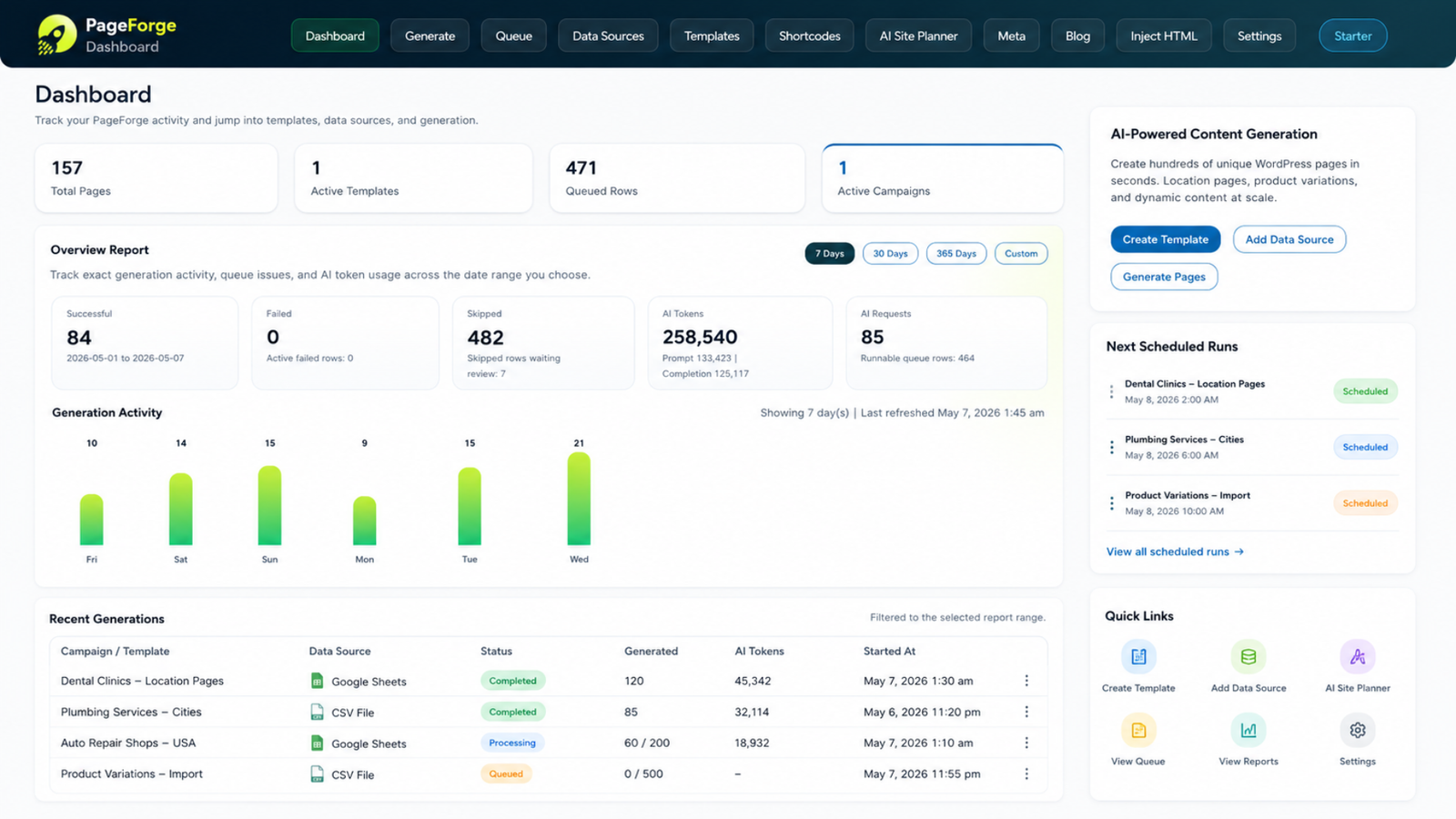
Build one strong local page experience and let verified local facts create the differences that matter









What does a local SEO location page generator do?
A location page should represent a real place, service area, or business entity
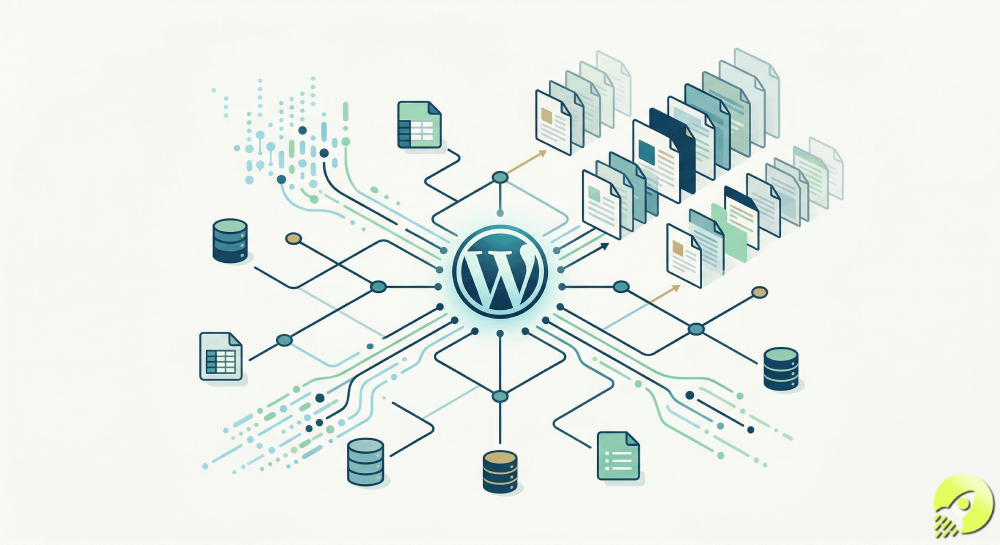
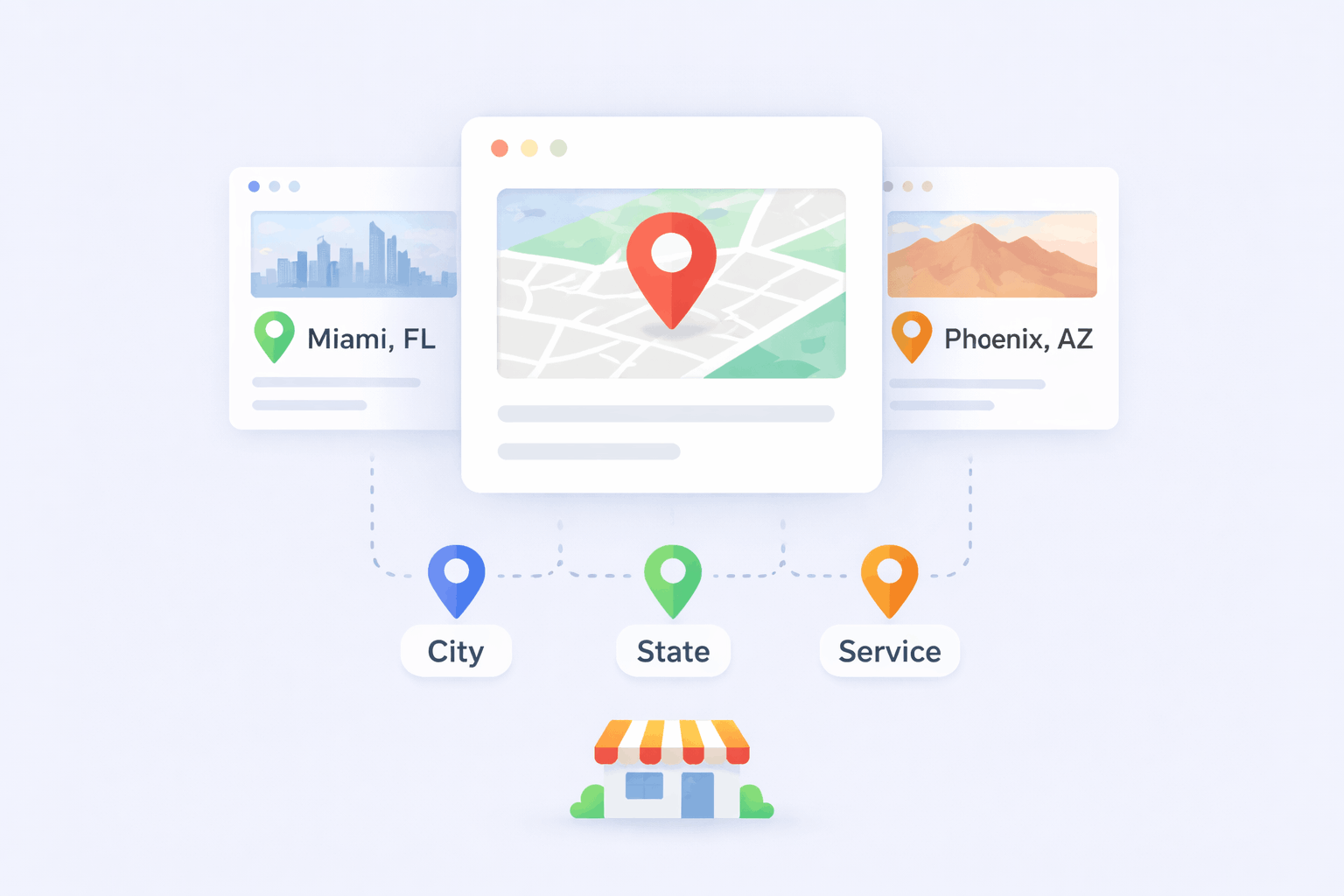
Local seo location page generation begins with verified branch, location, service-area, and local proof data and a documented page or content model. Each location record supplies the facts and decisions that genuinely change, while the reusable WordPress template provides a consistent hierarchy, responsive design, and conversion path.
PageForge can connect approved fields to location names, services, coverage, NAP, hours, proof, images, metadata, LocalBusiness or relevant schema, nearby links, and conversion paths. The goal is not the largest possible output. The goal is a maintainable system in which every generated or updated record serves a distinct purpose, uses verified information, and remains editable in WordPress.
The safest implementation is draft-first. Process representative edge cases, inspect the source-to-output mapping, correct systematic problems in the source or template, and expand only after the pilot passes content, media, SEO, schema, internal-link, and mobile checks.
Changing only a city name creates thin pages, duplicate intent, weak local trust, and poor conversion paths
Manual production becomes fragile when the campaign grows from a few records into a repeatable matrix. Teams copy content, replace values in several interfaces, and gradually create inconsistent design, metadata, links, and ownership.
A basic import or one-click generator does not solve the complete workflow. It may move fields or produce fluent text while leaving the team to repair hierarchy, responsive layout, location names, services, coverage, NAP, hours, proof, images, metadata, LocalBusiness or relevant schema, nearby links, and conversion paths, and publication status after generation.
The most important risks are invented addresses, doorway pages, inconsistent NAP, duplicate local intent, unsupported schema, irrelevant proof, and stale hours or coverage. PageForge reduces repetitive work so the team can focus on source quality, unique value, user experience, accountable review, and continuous improvement.
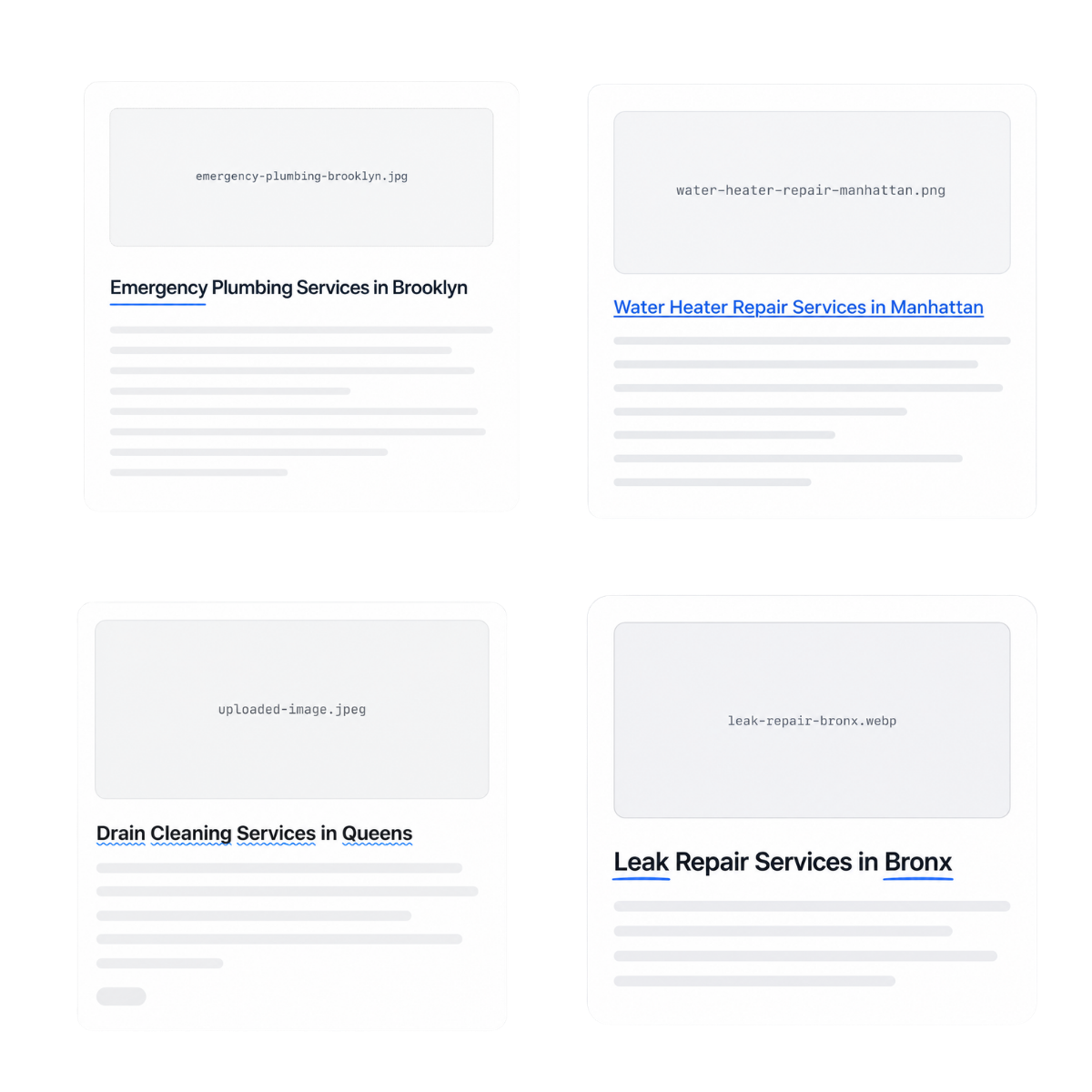
A nine-stage workflow from real-world location model to verified WordPress pages
Organize the operation as coverage → hierarchy → local data → template → mapping → pilot → links → publish → maintain. Treat each stage as a quality gate and fix the source rule or template before a repeated issue reaches more location pages.
1. Define the real-world location model
2. Collect verified local data
3. Design hierarchy and URLs
4. Build the responsive location template
5. Map content, metadata, and schema
6. Generate representative drafts
7. Review NAP, proof, links, and mobile UX
8. Publish controlled regional batches
9. Maintain changing local information

Correct an address, service-coverage rule, opening hour, or proof source before the mistake spreads across a region
Document the owner, permitted values, validation rule, destination, and approval requirement for every important field. Stable IDs prevent duplicate records. Required-field checks block incomplete output. Explicit statuses separate preparation from publication eligibility.
Test the complete data range: long names, short values, missing optional content, unusual characters, different media ratios, multiple buttons, tables, FAQs, and desktop, laptop, tablet, and mobile breakpoints. A polished template cannot compensate for unreliable source data, and verified data cannot compensate for a broken layout.
Preserve the relationship between location record IDs and WordPress IDs. When facts, URLs, rules, or designs change, identify affected outputs, create or update drafts, review the delta, and retain a publication log.
Combine reusable design with verified local entities, services, proof, schema, and navigation
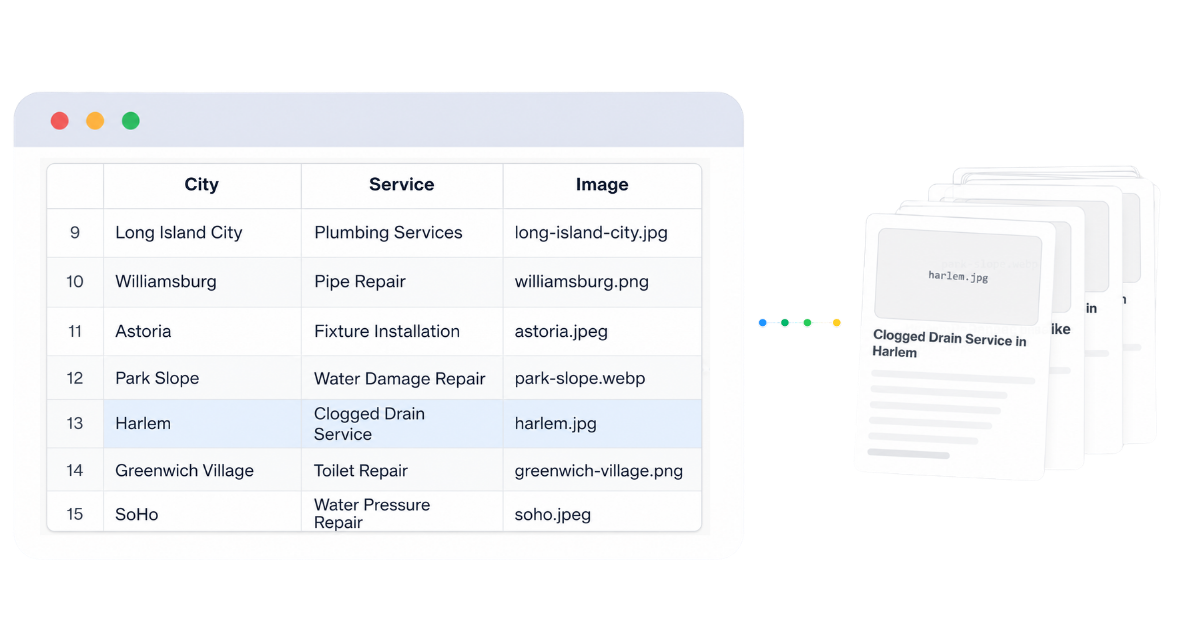
Branch and service-area records
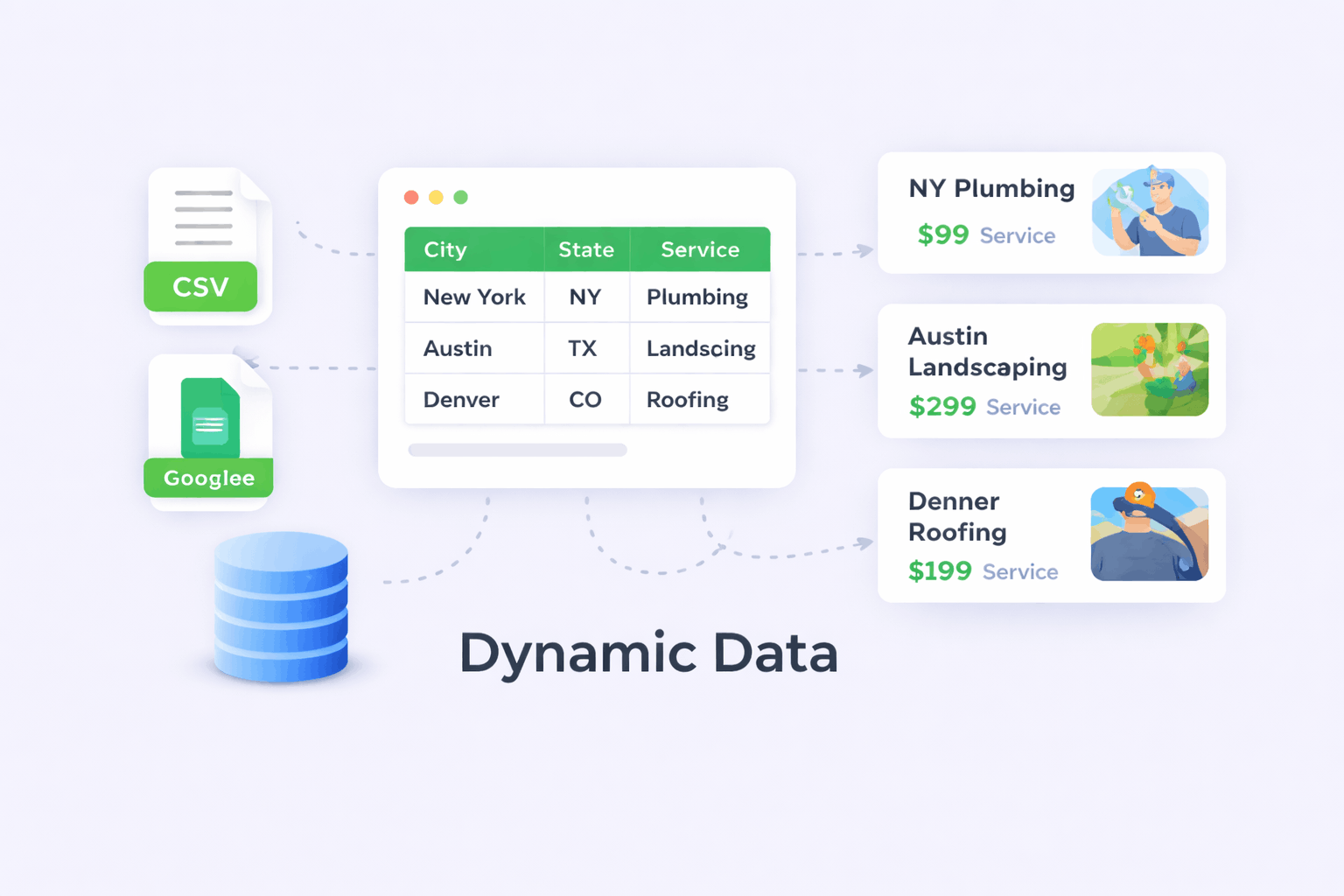
Dynamic local content

Local URLs, metadata, and breadcrumbs

LocalBusiness and relevant schema
Regional hubs and nearby links
Draft review and maintenance
Define stable records, approved fields, ownership, validation, and publication rules before local SEO location page generator reaches WordPress
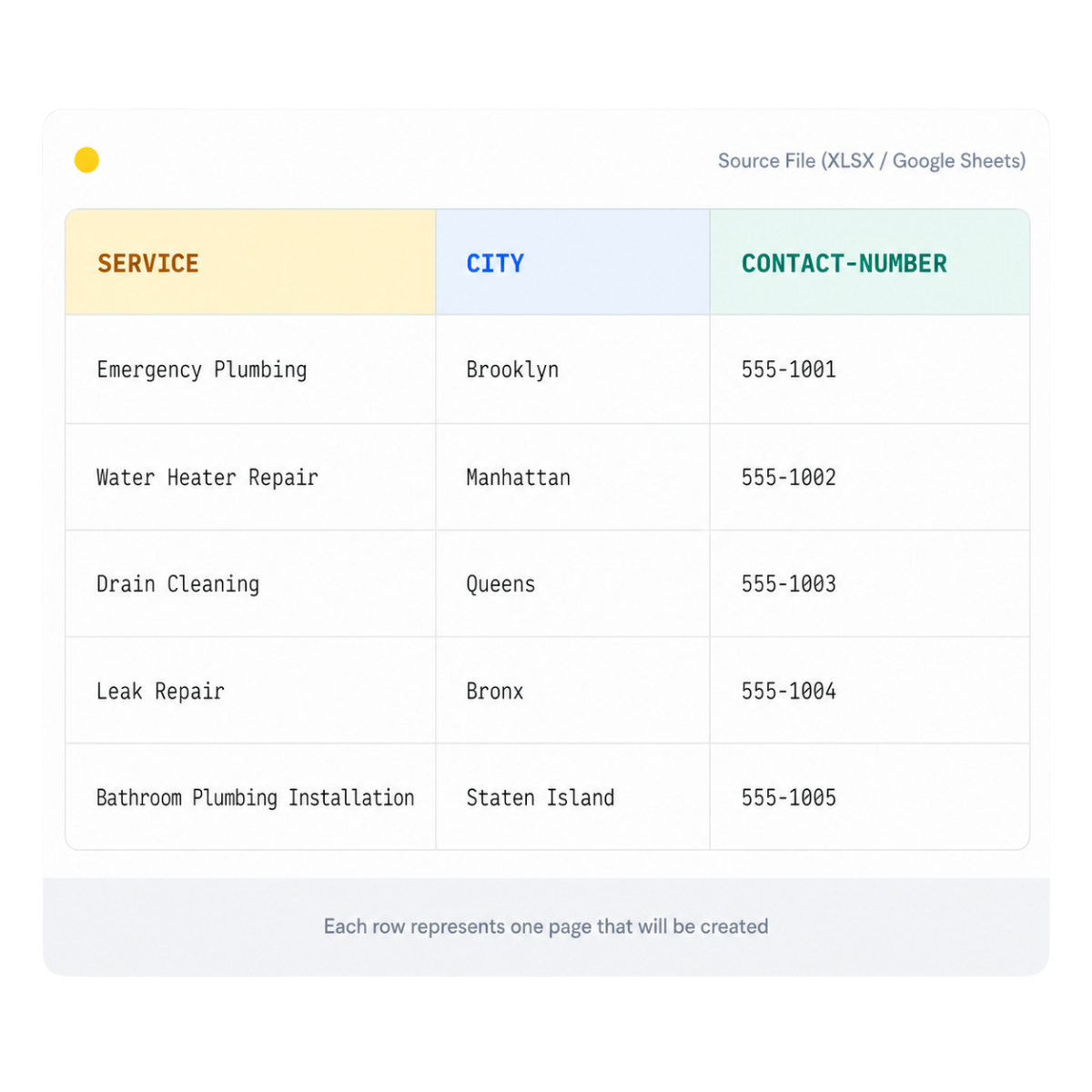
Start with a representative source set for local SEO location page generator. Document a stable record ID, the intended URL, public title, page-specific facts, media, alt text, metadata, schema properties, internal-link destinations, owner, review status, and publication eligibility. Keep working notes and experiments outside the approved production view.
Use explicit field names, accepted values, required-field rules, and exclusion logic. Normalize URLs and identifiers before generation, detect duplicates, and preserve a versioned snapshot of the exact values processed. The source should explain why each WordPress record exists and what makes it materially different from the others.
A clean source model turns Local SEO Location Page Generator into an auditable operation rather than an uncontrolled content shortcut. It also makes future updates safer because maintainers can identify the responsible owner, the original source, the affected WordPress ID, and the expected public result.
Keep the public page and its machine-readable fields connected to the same approved facts
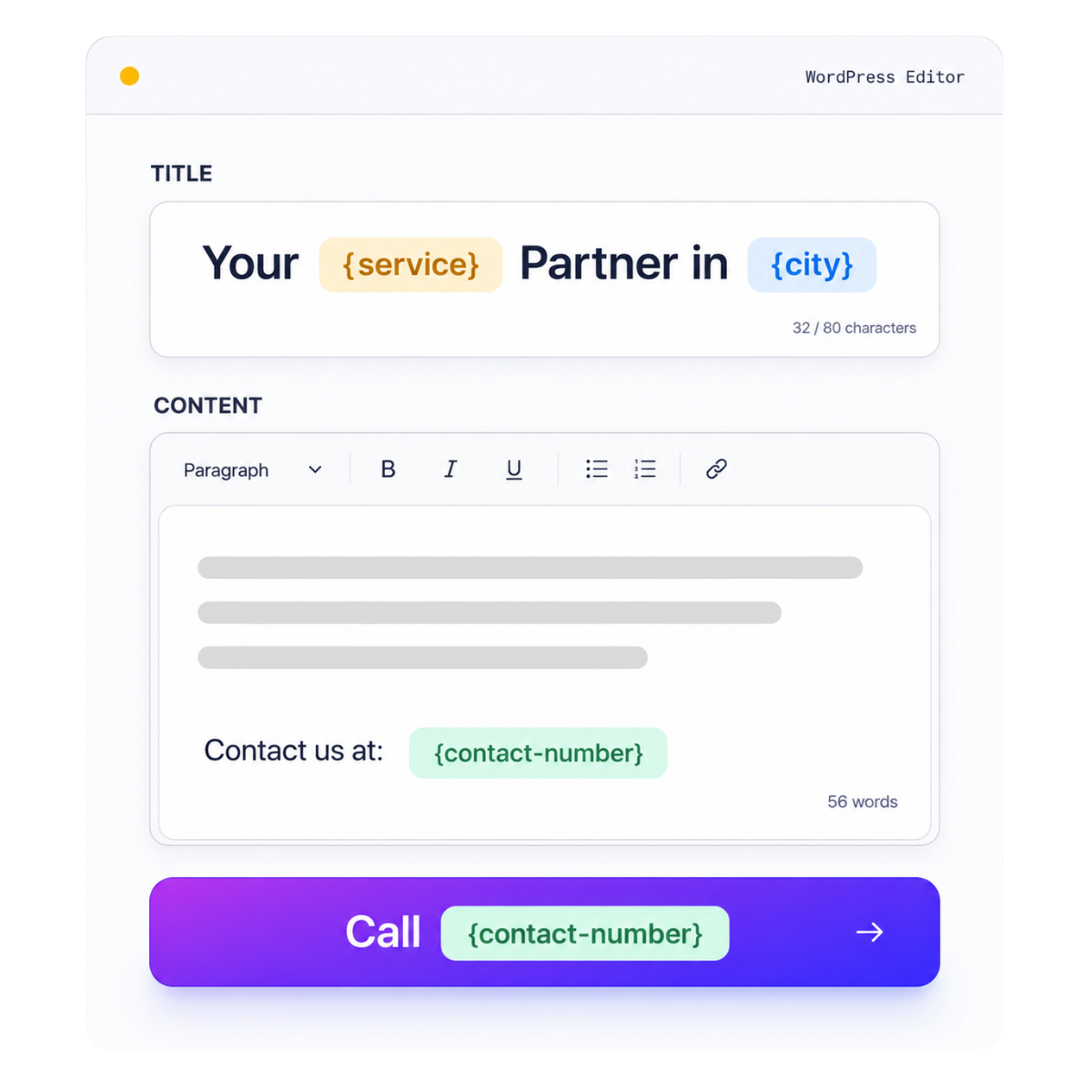
Mapping begins with search intent. Decide which fields control the WordPress title, H1, slug, short answer, body sections, images, buttons, FAQs, SEO title, meta description, canonical, schema, breadcrumbs, and related links. Every output field should trace back to an approved source or a clearly governed template rule.
Use deterministic URL patterns and normalize punctuation, spaces, casing, accents, and reserved words. Audit the live site before creating a record so an existing relevant URL is updated rather than duplicated. Keep visible claims and schema synchronized; structured data must never describe facts that the visitor cannot verify on the page.
For local SEO location page generator, the safest approach is to generate a small draft pilot and compare every mapped field against the source. Fix recurring errors in the mapping or template instead of manually correcting individual outputs that will later drift apart.
Design the complete page once, then let approved records control only the facts and decisions that genuinely change
A scalable local SEO location page generator workflow starts with a complete responsive landing-page template, not an empty canvas filled with one generated text block. Build the hierarchy, direct answer, capabilities, screenshots, use cases, practical example, comparison, safeguards, FAQs, related resources, and conversion path before processing a large record set.
Keep durable explanatory content in the template and place changing entities, attributes, proof, availability, examples, images, CTAs, and relationship fields in the source model. Define how optional sections behave when data is absent: hide the section, use an approved fallback, or block the record. Never leave tokens, empty headings, broken images, or generic filler visible.
The final pages must remain editable in WordPress. Preserve supported Elementor, Gutenberg, Divi, template, post-type, metadata, and schema data so editors can improve a page without rebuilding the campaign.
Separate stable template explanations from record-specific facts
Use explicit approval and fallback rules instead of blank or invented values
Keep every generated or updated record editable inside WordPress
Choose Pages, Posts, or supported custom post types according to information architecture—not because one generation screen defaults to a single type
Commercial feature, service, location, and evergreen landing pages usually belong as WordPress Pages. Supporting articles belong as Posts when dates, authors, categories, archives, and editorial feeds matter. Directories, profiles, documentation, listings, or other structured collections may justify a custom post type when the site already has a stable public template and taxonomy model.
For local SEO location page generator, select the record type before mapping fields. Confirm the public URL base, parent relationships, archive behavior, sitemap inclusion, SEO-plugin support, Elementor or theme compatibility, and editing permissions. Do not create a new custom post type only to avoid planning the site hierarchy.
Whatever type is selected, test a representative draft, verify frontend rendering and source metadata, and confirm that the final record can be discovered through navigation and contextual internal links.
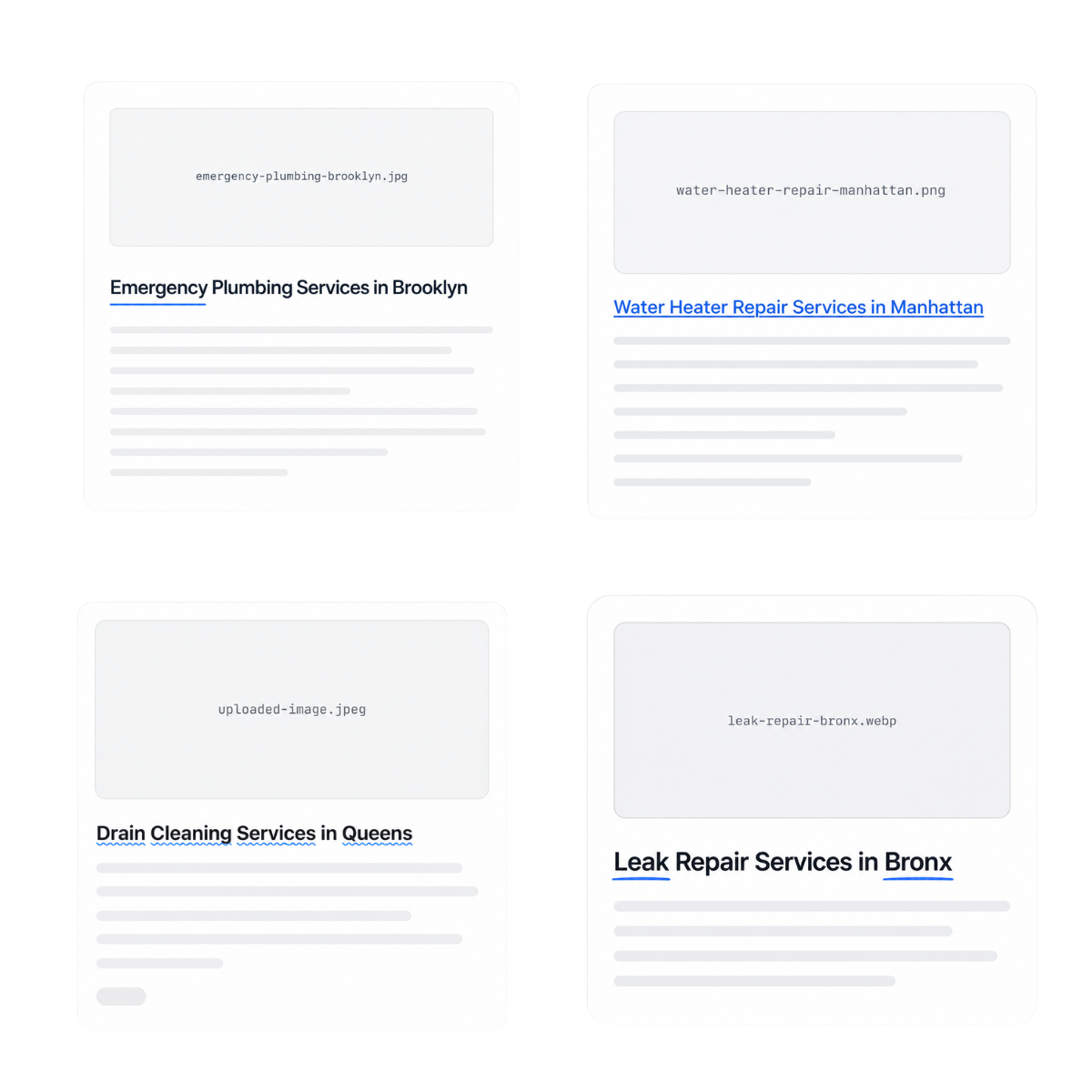
Generate efficiently, but require content, media, SEO, schema, link, and responsive approval before public release
Automation can repeat a mistake as quickly as it repeats a correct rule. Begin local SEO location page generator with Draft or Pending Review. Test long and short values, missing optional data, duplicate URL proposals, different media ratios, special characters, tables, buttons, FAQ toggles, and desktop, laptop, tablet, and mobile breakpoints.
Review the H1 and hierarchy, direct answer, factual claims, images and alt text, metadata, canonical, schema, breadcrumbs, internal links, CTAs, forms, analytics, caching, and page speed. Record the reviewer, decision, source snapshot, WordPress ID, final URL, and rollback instruction.
Publish a limited cohort, confirm HTTP 200, index/follow directives, sitemap inclusion, and conversion paths, then expand only after the pattern works reliably. No plugin can guarantee ranking or indexation; the pages still need demand, originality, authority, crawlability, useful content, and ongoing improvement.
Local seo location page generation use cases
Multi-branch professional services
Home-service coverage areas

Franchise and dealer networks

Healthcare and clinics

Hospitality retail and venues
Agency local SEO campaigns
From 65 verified service areas to a connected local WordPress architecture
A regional HVAC company has four physical branches, five services, and sixty-five verified service areas. Branch pages use real addresses, hours, teams, directions, and local photos. Service-area pages describe coverage without implying a staffed office.
Operations owns coverage and hours; branch managers supply local projects and images; marketing controls shared benefits; SEO owns URLs, metadata, schema, links, and canonical decisions.
An Elementor pilot catches one area assigned to the wrong branch, duplicate city-service slugs, and a generic image that does not represent the service. The source and template are fixed before the approved set is generated.
Regional hubs link to branches and service areas. Pages are released market by market and reviewed whenever hours, coverage, staff, or location status changes.
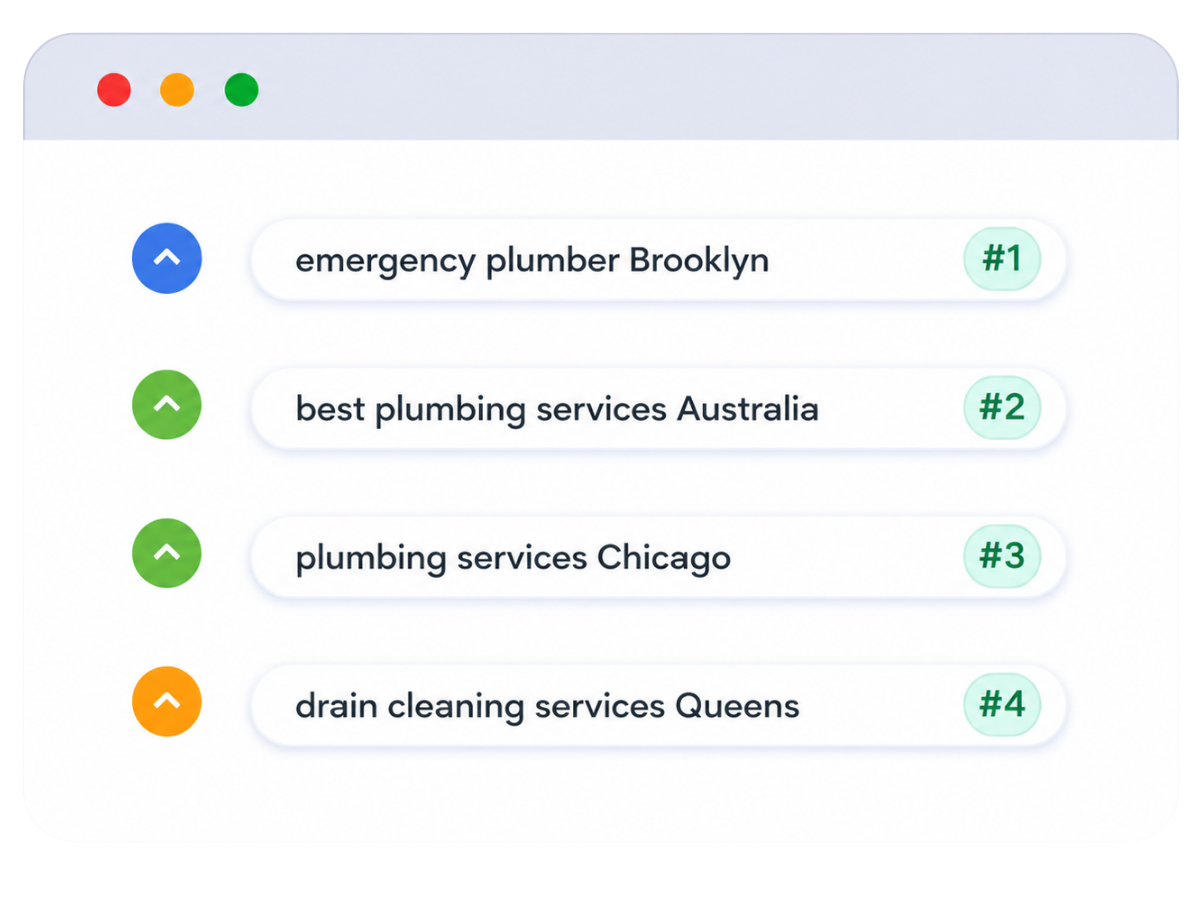
Local location-page workflow comparison
Safeguards for responsible local SEO location page generation
Never invent a branch address or service relationship
Keep visible NAP and schema synchronized
Require local proof and a representative pilot
Keep every generated or updated record editable, auditable, and connected to the website your team owns
Document the owner, permitted values, validation rule, destination, and approval requirement for every important field. Stable IDs prevent duplicate records. Required-field checks block incomplete output. Explicit statuses separate preparation from publication eligibility.
Test the complete data range: long names, short values, missing optional content, unusual characters, different media ratios, multiple buttons, tables, FAQs, and desktop, laptop, tablet, and mobile breakpoints. A polished template cannot compensate for unreliable source data, and verified data cannot compensate for a broken layout.
Preserve the relationship between location record IDs and WordPress IDs. When facts, URLs, rules, or designs change, identify affected outputs, create or update drafts, review the delta, and retain a publication log.
Validate the model with a controlled pilot, then expand when the data, template, and review process are proven
Use a controlled CSV to test the location model, service combinations, template, content, media, metadata, schema, internal links, and mobile layout.
Choose Pro for Google Sheets, queues, scheduling, larger operations, reporting, source updates, or advanced controls available in the active version and plan.
Validate a local page family with PageForge Free
Use PageForge Pro for collaborative local operations
Who should use local SEO location page generation
A strong fit
Best starting condition
Do not scale when
Operational commitment
Local seo location page generation: practical questions answered
-
What is local SEO location page generation?
Local seo location page generation combines verified branch, location, service-area, and local proof data with a reusable WordPress workflow to create or manage branch, office, store, franchise, city, and service-area pages. A responsible implementation keeps the result editable, validates location names, services, coverage, NAP, hours, proof, images, metadata, LocalBusiness or relevant schema, nearby links, and conversion paths, and requires human review before public release.
-
Does PageForge guarantee rankings or indexation?
No. PageForge improves production and operational control, but rankings and indexation depend on demand, intent match, originality, authority, technical health, internal links, competition, user satisfaction, and maintenance.
-
Can the workflow begin with drafts?
Yes. Draft or Pending Review is the safest starting status for a new campaign. Review content, media, metadata, canonical URLs, schema, links, responsive rendering, and conversion paths before publishing.
-
Can I use CSV and Google Sheets?
CSV is supported for controlled campaigns. Google Sheets connectivity is described as a Pro workflow in the current PageForge listing. Verify the installed version and plan before publishing time-sensitive capability claims.
-
Does PageForge work with Elementor?
PageForge supports Elementor workflows and can preserve a complete native layout when the template and mapped widgets are compatible. Test the target theme, Elementor version, and essential addons before scaling.
-
Can PageForge populate SEO metadata and schema?
PageForge supports dynamic metadata and structured-data workflows. Map only approved values, verify the active SEO-plugin integration, and ensure structured data matches the visible page without duplicate conflicting output.
-
How should I prevent duplicate URLs?
Use stable record IDs, normalized slug inputs, uniqueness checks, and a live-site slug audit. Update an existing relevant URL in place when it already owns the intended search intent.
-
What happens when required source data is missing?
Block the record or route it to review. Optional values may hide a section or use an approved fallback, but required facts must not be replaced with invented or generic content.
-
Can I create a service-area page without an office?
Yes, when the business genuinely serves the area. Explain coverage clearly and do not imply a staffed branch or address that does not exist.
-
How do I avoid doorway pages?
Require real demand, valid coverage, page-specific facts, local proof, independent usefulness, intentional links, and a conversion path.
-
Which schema should a local page use?
Use the type matching the real entity and visible content, and avoid duplicating equivalent output from the active SEO plugin.
-
What is the safest local launch?
Model hierarchy, verify data, build the complete template, generate branch and service-area pilots, review facts and schema, publish one market, then expand.